Bibliography:

Translations: 

Bulgarian:

  • Dom dzienny, dom nocny, transl. Christina Ivanova Simeonova-Mitova, Weliko Trnowo: Abagar, 2005.
  • Muzika ot mnogo barabani (Gra na wielu bębenkach), transl. Sylwia Borisowa, Sofia: Vessela Lutskanova Publishing House Ltd., 2006
  • Posledni istorii (Ostatnie historie), transl. Mirka Kostowa, Sofia: Vessela Lutskanova, 2008
  • Pravek i drugi vremena (Prawiek i inne czasy), trans. Georgi Krystew, Sofia: Altera – Delta Entertainment, 2008
  • Beguni (Bieguni), transl. Sylwia Borisowa, Sofia: Vessela Lutskanova, 2009

Catalan:

  • Un lloc anomenat Antany (Prawiek i inne czasy), transl. Anna Rubió, Jerzy Sławomirski. Barcelona: Proa, 2001.
Chinese:
  • Taigu he qitade shijian (Prawiek i inne czasy), transl. Yi Lijun, Yuan Hanrong yi. Taibei: Dakuai Wenhua Chubanshe Gufen Youxian Gongsi, 2003.
Czech:
  • Denní dům, noční dům (Dom dzienny, dom nocny), transl. Petr Vidlák. Brno: Host, 2002.
  • Pravěk a jiné časy (Prawiek i inne czasy), transl. Petr Vidlák. Brno: Host, 1999.
  • Hra na spoustu bubínků (Gra na wielu bębenkach), Olomouc: Periplum, 2005.
  • Anna In v hrobech sveta (Anna In w grobowcach świata), trans. Jan Faber, Zlín: Kniha Zlín, 2008.
  • Beguni (Bieguni), tłum. Petr Vidlák, Pavel Pec, Brno: Host, 2008
Danish:
  • Arilds tid og andre tider: roman (Prawiek i inne czasy), transl. Runa Kildegaard Klukowska. København: Fremad, 1998.
  • Broderskabets rejse: roman (Podróż ludzi Księgi), transl. Runa Kildegaard Klukowska. København: Fremad, 1997.
  • E. E.: roman (E.E.), transl. Runa Kildegaard Klukowska. København: Fremad, cop. 1996.
Dutch:
  • Amos, transl. Karol Lesman. Breda: De Geus, 1998.
  • Huis voor de dag, huis voor de nacht (Dom dzienny, dom nocny), transl. Karol Lesman. Breda: De Geus, 1999, 2000.
  • Oer en andere tijden (Prawiem i inne czasy), transl. Karol Lesman. –Breda: De Geus, 1998.
  • De laatste verhalen (Ostatnie historie), trans. Karol Lesman, Breda: De Geus, 2008

English:

  • House of day, house of night (Dom dzienny, dom nocny), transl. Antonia Lloyd-Jones. Evanston, Ill.: Northwestern Univ. Press, 2003.
  • House of day, house of night (Dom dzienny, dom nocny), transl. Antonia Lloyd-Jones. London: Granta Books, 2002. 
  • Primeval and other times (Prawiek i inne czasy), transl. Antonia Lloyd-Jones. Prague: Twisted Spoon Press, 2010.
Finnish:
  • Päivän talo, yön talo [Dom dzienny, dom nocny], trans. Tapani Kärkkäinen, Helsinki, Otava, 2004
  • Alku ja muut ajat [Prawiek i inne czasy], trans Tapani Kärkkäinen, Helsinki Otava, 2007
French:
  • Dieu, le temps, les hommes, et les anges (Prawiek i inne czasy), transl. Christophe Glogowski. Paris: R. Laffont, 1998.
  • Maison de jour, maison de nuit (Dom dzienny, dom nocny), transl. Christophe Glogowski. Paris: R. Laffont, 2001.
  • Récits ultimes (Ostatnie historie), transl. Grażyna Erhard. Lausanne: Les Éditions Noir sur Blanc, 2007.

German:

  • Der Schrank: Erzählungen (Szafa), transl. Esther Kinsky. München: Dt. Taschenbuch-Verl., 2001.
  • Der Schrank: Erzählungen (Szafa), transl. Esther Kinsky. Stuttgart; München: Dt. Verl.-Anst., 2000.
  • Taghaus, Nachthaus: Roman (Dom dzienny, dom nocny), transl. Esther Kinsky. 2. Aufl. München: Dt. Taschenbuch-Verl., 2004.
  • Taghaus, Nachthaus: Roman (Dom dzienny, dom nocny), transl. Esther Kinsky. Stuttgart; München: Dt. Verl.-Anst., 2001.
  • Ur und andere Zeiten: Roman (Prawiek i inne czasy), transl. Esther Kinsky. Berlin: Berlin-Verl., 2000, 2002.
  • Letzte Geschichten (Ostatnie historie), München: Dt. Verl.-Anst., 2006.
  • Spiel auf vielen Trommeln (Gra na wielu bębenkach), Berlin: Matthes und Seitz, 2006.
  • Unrast (Bieguni), trans. Esther Kinsky, Frankfurt am Main: Schöffling & Co., 2009
Hungarian:
  • Az Öskönyv nyomában (Podróż ludzi Księgi), transl. Mihályi Zsuzsa. Budapest: Európa Kvk., 2000.
  • Sok dobon játszani (Gra na wielu bębenkach), trans. Zsuzsa Mihályi, Lajos Pálfalvi, Budapest: Napkút K., 2006.
Italian:
  • Dio, il tempo, gli uomini e gli angeli (Prawiek i inne czasy), transl. Raffaella Belletti. Roma: E/O, cop. 1999.

Lithuanian:

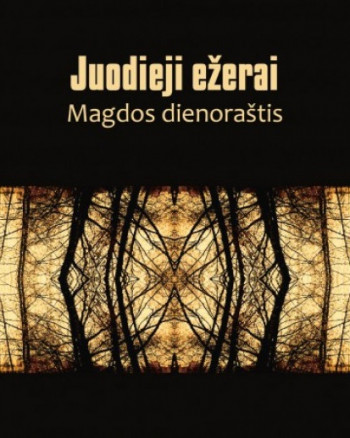
  • Praamžiai ir kiti laikai: romanas (Prawiek i inne czasy), transl. Vyturys Jarutis. Vilnius: Strofa, 2000.

Macedonian:

  • Pravek i drugite vreminja (Prawiek i inne czasy), trans. Lidija Tanusevska, Skopje: Makedonska rec, 2008
Norwegian:
  • E. E. (E. E.), transl. Anne Walseng. [Oslo]: Cappelen, 2001.
Rumanian:
  • Călătoria oamenilor Cărţii (Podróż ludzi Ksiegi), transl. Constantin Geambaşu. Iaşi: Polirom, 2001.
  • Străveacul şi alte vremi (Prawiek i inne czasy), transl. Olga Zaicik. Iaşi: Polirom, 2002.
Russian:
  • Pravek i drugie vremena (Prawiek i inne czasy), transl. Tatiana Izotova Moskva: Novoe Lit. Obozrenie, 2004.
  • Put’ ljudej Knigi: roman (Podróż ludzi Księgi). Moskva: AST, 2002.
  • Dom dnevnoj, dom nočnoj (Dom dzienny, dom nocny), Moskva: Tranzitkniga: AST Moskva Kyzyl: AST, 2005.
  • Igra na raznych barabanach (Gra na wielu bębenkach), Moskva: Novoe Lit. Obozrenie, 2006.
  • Poslednie istorii (Ostatnie historie), Moskva: Novoe Lit. Obozrenie, 2006.
Serbo-Croatian:
  • Dnevna kuća, noćna kuća (Dom dzienny, dom nocny), transl. Milica Markić. Beograd: Nolit, 2002. – 284,
  • Dom danji, dom nocni (Dom dzienny, dom nocny), transl. Pero Mioč. Zagreb: Nakladni Zavod Matice Hrvatske, 2002, 2003.
  • Ormar (Szafa), transl. Đurđica Čilić Škeljo. Zagreb: Naklada MD, 2003.
  • Pravijek i ostala vremena (Prawiek i inne czasy), transl. Pero Mioč. Zagreb: Nakladni Zavod Matice Hrvatske, 2001.
  • Svirka na mnogo bubnjeva (Gra na wielu bębenkach), transl. Milica Markić. Beograd: Nolit, 2004.
  • U potrazi za knjigom (Podróż ludzi Księgi), transl. Milica Markić. Beograd: Nolit, 2001.
Spanish:
  • Un lugar llamado Antaño (Prawiek i inne czasy), transl. Ester Rabasco Macías, Bogumila Wyrzykowska. Barcelona: Lumen, 2001.
Swedish:
  • Spel på många små trummor: noveller (Gra na wielu bębenkach), transl. Jan Henrik Swahn. [Tollarp]: Ariel; Lund: Ellerström, 2002.
  • Daghus, natthus (Dom dzienny, dom nocny), transl. Jan Henrik Swahn. Ariel Skrifter, 2005.
  • Gammeltida och andra tider (Prawiek i inne czasy), Tollarp: Ariel, 2006.
Ukrainian:
  • Pravìk ta ìnšì časi (Prawiek i inne czasy), Lwów: Kal'varìâ, 2005.
  • Octanni ictopiï (Ostatnie historie), Lwów: Litopys, 2007

Tokarczuk Olga

(born 1962) writes novels and essays and is the most widely admired Polish author of her generation. The winner of many prizes and honours, she has the rare distinction of being equally valued by the critics and the general reading public. As a teenager she tried her hand at poetry, but then remained silent for many years, until she wrote her first novel, The Journey of the People of the Book (1993), which was very well received by the critics. The book is a sort of modern parable. On the literal level it is about an unsuccessful expedition to find the mysterious Book; along the way the two main characters fall passionately in love. The story is set in seventeenth-century France and Spain; however, it is not the local colour that predominates, but the fascinating enigma of the mysterious Book. In her second novel, E.E. (1995), Tokarczuk turns back to a past era that is much closer to our own. This time the action is set in Wrocław in the early twentieth century. The main character is Erna Eltzner (the E.E. of the title), an adolescent girl from a bourgeois Polish-German family, who is found to have the powers of a medium. Here too we find a fascination with mysterious phenomena that defy human understanding. Without doubt Tokarczuk’s greatest and most acclaimed success to date is her third novel, Prawiek and Other Times (1996). The Prawiek of the title (the word prawiek means “time immemorial”), a mythical village supposedly lying at the very centre of Poland, is an archetypal universe in miniature where all the joys and sorrows known to man are concentrated. As Jerzy Sosnowski wrote about this novel, “From odds and ends of real history Tokarczuk builds a myth, i.e. a history with a rigid order, where all the events, including the bad and tragic ones, have their reasons for happening. She organises space according to the model of the mandala – a circle drawn inside a square, which is the geometrical image of perfection and completion.” Prawiek and Other Times is the high point in modern Polish mythical fiction. Her next novel, House of Day, House of Night (1998), is very different in tone and genre. The word “novel” is quite misleading here, because the book is a hybrid of different pieces, including lots of sketches and more coherent stories, notes of an almost essay-like nature, private diary entries, etc. Indeed, House of Day, House of Night is the author’s most personal book and also her most “local”; in it she takes a close look at the area where she lives (in and around a village in the Sudety Mountains on the Polish-Czech border). Among the stories inspired by the place is the captivating tale of the mediaeval Saint Kummernis, a woman whom God saved from an unwanted marriage by giving her a man’s face. In 1997 she published a small collection of three short stories, entitled The Wardrobe, but until Playing Many Drums (2001) came out there had been few opportunities to admire her talent as a short story writer. This book includes 19 stories arranged in three groups. The first group of stories could be described as self-referring, because they are about the nature of creativity (not just literary). The second group are apocryphal; just like the tale of Kummernis which was based on an authentic story Tokarczuk found in the Lower Silesian provinces, four of the stories included in Drums are also based on local legends, which she develops and continues in her own way, adding colour and enlivening the bare historical facts. Finally, the third group includes a number of stories with realistic main themes of a moral/psychological kind. Olga Tokarczuk has also published an essay as a separate book (The Doll and the Pearl, 2000), in which she offers a new interpretation of Bolesław Prus’s late nineteenth-century novel The Doll, which is considered a masterpiece of Polish novel writing.

Back


author
books
excerpts
news


Name:
Email:


There are more than 28,000 publishers registered in Poland. However, the market is highly concentrated. The 200 largest publishing firms still hold almost 98 per cent of it. More »

© 2003-2010 Instytut Książki Design by