 | Selected Bibliography:
- Niepokoj (Anxiety). 1947.
- Czerwona rekawiczka (The Red Glove). 1948.
- Nasz starszy brat (Our Elder Brother). 1992.
- Rozmowa z ksieciem (Conversation with a Prince), 1960.
- Glos Anonima (The Anonymous Voice). 1961.
- Nic w plaszczu Prospera (Nothing Dressed in Prospero's Cloak). 1962.
- Twarz (The Face). 1964.
- Twarz trzecia (The Third Face). 1968.
- Stara kobieta wysiaduje (The Old Lady Sits Waiting). 1969.
- Na czworakach (On All Fours). 1972.
- Kartoteka rozrzucona (The Card Index Scattered). 1997.
- Biale malzenstwo (White Wedding). 1975.
- Pulapka (The Trap). Warsaw: Czytelnik, 1982.
- Plaskorzezba (Bas-Relief). Wroclaw: Wydawnictwo Dolnoslaskie, 1991.
- Kartoteka (The Card Index). 1968.
- Zawsze fragment. Recycling (Always a Fragment: Recycling). Wroclaw: Wydawnictwo Dolnoslaskie, 1998.
- Matka odchodzi (Mother Departs). Wroclaw: Wydawnictwo Dolnoslaskie, 1999.
- Nozyk profesora (The Professor's Knife). Wroclaw: Wydawnictwo Dolnoslaskie, 2001.
- Szara strefa (Grey Zone), Wrocław: Wydawnictwo Dolnośląskie, 2002.
- Wyjście (Exit), Wrocław: Wydawnictwo Dolnośląskie, 2004.
- nauka chodzenia, Wrocław: Biuro Literackie, 2007
- Kup kota w worku, Wrocław: Biuro Literackie, 2008
Selected translations:
Arabian:
- Al-milaff [Kartoteka], Cairo: al-Mağlis Al-'a'lī lil-Taqafa, 2004.
Bulgarian:
- Walka o oddech, trans. Zdrawko Kisiow, Karina M Todorowa, 2003
Catalan:
- Angoixa = Niepokój [polish-catalan edition], Carcaixent: Edicions 96, 2002.
Dutch:
- De rest is zwijgen. Gedichten (Reszta jest milczeniem. Wiersze), trans. Karol Lesman, Breda: De Geus, 2003
English:
- The card index, & other plays. Transl. Adam Czerniawski. London: Calder & Boyars 1969.
- Faces of anxiety: poems. Transl. Adam Czerniawski. London: Rapp & Whiting 1969.
- The witnesses & other plays. Transl. Adam Czerniawski. London: Calder & Boyars 1970.
- ”The survivor” and other poems. Princeton, New York: Princeton University Press 1977.
- Selected poems. Transl. Adam Czerniawski. Harmondsworth: Penguin 1976.
- Unease. St. Paul: New Rivers Press 1980.
- Green Rose. Poems. Darlington: W.A. John Michael Group of Companies 1982.
- Conversation with the prince: and other poems. Transl. Adam Czerniawski. London: Anvil Press Poetry 1982.
- Mariage Blanc and The hunger artist departs (Białe małżeństwo): two plays. Transl. Adam Czerniawski. London, New York: Marion Boyars 1983.
- They came to see a poet. Transl. Adam Czerniawski. London: Anvil Press Poetry 1991.
- Forms in relief and other works. New York: Legas 1994.
- The Trap (Pułapka). Transl. Adam Czerniawski. Amsterdam: Harwood Acad. 1997.
- Reading the apocalypse in bed: Selected plays and short pieces. Transl. Adam Czerniawski. New York: Marion Boyars 1998.
- Recycling. London: Arc publication, 2001.
- They came to see a poet: selected poems, Transl. Adam Czerniawski. London: Anvil Press Poetry, 2004.
- New Poems, Transl. Bill Johnston. New York: Archipelago Books, 2007
Estonian:
- Alati fragment [wybór wierszy], transl. Hendrik Lindepuu, Tartu: Hendrik Lindepuu Kirjastus, 2007
- Valitud luuletused [wybór wierszy], transl. Hendrik Lindepuu, Tartu: Hendrik Lindepuu Kirjastus, 2009
French:
- Anthologie personnelle, trans. Georges Lisowski, Allan Kosko, Actes Sud 1990
- Le piège; précédé de Conversations interrompues, trans. Alain Van Crugten, Paris: Ed. Théâtrales 1993, 2005
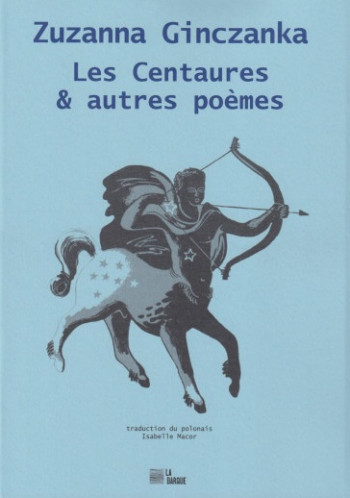
- Poésies choisies. Bilingue, Kraków: Wydawnictwo Literackie 1998
- Poèmes dans: Poètes de l’apocalypse, Lille: Presses Univ. de Lille, 1992
- Théâtre I: Le Fichier; Témoignage ou notre petit confort, trans. Jacques Donguy, Michel Maslowski, Age d'Homme, 2005
- Inquiétudes (Wybór poezji), trans. Grażyna Erhard, Buchet Chastel, 2005
- Théâtre II: Drôle de petit vieux; La Vieille Femme qui couve; La Sortie de l’Artiste de la Faim, trans. Jacques Donguy, Michel Maslowski, Lausanne, L’Age d’Homme, 2008
- Regio et autres poèmes, trans. K. Jeżewski et C.H. du Bord, Paris: Arfuyen, 2008
- Ma fille, transl. Lydia Waleryszak, Belval: Circé, Belval, 2009
German:
- Der unterbrochene Akt. Berlin: G. Kiepenheuer, 1965.
- Weisse Ehe. Berlin: G. Kiepenheuer, 1976.
- Die Laokoon-Gruppe. Berlin: G. Kiepenheuer, 1962.
- Die Karthotek. Berlin: G. Kiepenheuer, 1961.
- Entblössung. Münich: Hanser, 1968.
- Auf allen Vieren. Berlin: G. Kiepenheuer, 1973.
- Der Abgang des Hungerkünstlers. Berlin: Literar. Colloquium, 1980.
- Die Falle. Berlin: Henschel, 1983.
- Eine alte Frau brütet. Berlin: G. Kiepenheuer, 1969.
- Der Tod in der alten Dekoration. Münich: Hanser, 1973.
- Der komische Alte. Berlin: G. Kiepenheuer, 1964.
- Die Zeugen oder unsere kleine Stabilisierung. Berlin: G. Kiepenheuer, 1964.
- Schild aus Spinngeweb. Frankfurt: Suhrkamp, 1967.
- Er ging aus dem Hause. Berlin: G. Kiepenheuer, 1965.
- Das Paradiesgärtchen und andere szenische Miniaturen. Berlin: Henschel, 1991.
- Überblendungen. Gedichte. Münich: Hanser, 1987.
- Der unterbrochene Gespräch. Gedichte. Graz: Droschl, 1992.
- Vorbereitung einer Dichterlesung und drei aussergewöhnliche szenische Miniaturen. Berlin: Katzengraben-Presse, 1993.
- Zweite ernste Verwarnung [selected poems], München Wien: C. Hanser, 2000.
- Mutter geht [Matka odchodzi], transl. Jolanta Doschek, Bernhard Hartmann i Alois Woldan, Passau: Karl Stutz, 2009
Hindi:
- W środku życia = Jīvan ke bīcőbīc [bilingual edition: polish-hindi],New Delhi: Vānī Prakāsan, 2001.
Hungarian:
- Anya elmegy [Matka odchodzi], transl. Körner Gábor, Budapest: Ráday Könyvesház, 2004.
Italian:
- Il guanto rosso e altre poesie [collected poems], Milano: Libri Scheiwiller, 2003.
- Bassorilievo [Płaskorzeźba], Milano: Libri Scheiwiller, 2004.
Lithuanian:
- Kritimas, arba Apie vertikaliuosius ir horizontaliuosius šiuolaikinio žmogaus gyvenimo elementus: poema = Spadanie, czyli O elementach wertykalnych i horyzontalnych w życiu człowieka współczesnego [polish-lithuanian edition], Wilno: UAB Ogamas, 2004.
- 4 poemos [Niepokój: selected poems, 1944-1994], Wilno: UAB Ogamas, 2004.
Spanish:
- El fichero. Madrid: Fundamentos, 1974.
- Testigos o nuestra pequeňa estabilizacion. Madrid: Fundamentos, 1975.
- Matrimonio blanco; El Ayunador se va [Białe małżeństwo; Odejście głodomora], Madrid: Asoc.de Directores de Escena de España, 2001.
- Poesía abierta: (1944-2003) [polish-spanish edition], Barcelona: La Poesía, Señor Hidalgo, 2003.
- Siempre fragmentos [selected poems], trans. Gerardo Beltrán, Abel A. Murcia, Caracas: Bid & co. Editor, 2008
Russian:
- Bez i drugije stichi, Sankt-Peterburg: Peterburgskij In-t.Jadernej Fiziki RAN, 2002.
- Tri p'esy [Na czworakach; Białe małżeństwo], Moskva: Tri Kvadrata, 2004.
- Greh : povest' i rasskazy [Grzech], Moskva: Tekst, 2005.
|
|
Różewicz TadeuszBorn in Radomsko in 1921, he studied art history at the Jagiellonian University in Cracow, but has been associated with Silesia since the late 1940s and has lived in Wroclaw for thirty years. A poet, playwright and novelist, he is the most versatile, and perhaps the pre-eminent living writer in the world today. His work has been translated into foreign languages including English, French, German, Serbian, Serbo-Croatian, Swedish, Danish and Finnish and has received Polish state prizes and foreign awards. He is renowned in many countries, and above all in the Balkans, as an example of an excellent poet of the highest moral authority. Rozewicz is a precursor of the avant-garde in poetry and drama, an innovator firmly rooted in the unceasing re-creation of the Romantic tradition, and an independent artist who, despite the pressure of public opinion, has steered clear of politics. He is a grand solitary, convinced of an artistic mission that he regards as a state of internal concentration, interior alertness, and ethical sensitivity. Many ask: Is poetry possible after Auschwitz? Rozewicz has provided his own answer by creating a new type of restrained verse that is known as the fourth versification system in literary Polish, in Anxiety (1947) and A Red Glove (1948). The fact that he has never accepted the consequences of the Second World War is indicated by the disturbing Our Elder Brother, a collection of stories published in various volumes since the 1950s, dedicated to his own brother who was murdered by the Gestapo. Rozewicz ferrets out contemporary instances of human cruelty. He is the founder of a shocking tendency in Polish literature, which concentrates on existence conceived as the effort to exist, as the struggle against nothingness - Conversation with a Prince, 1960; The Anonymous Voice, 1961; Nothing Dressed in Prospero's Cloak, 1962; The Face, 1964; and The Third Face, 1968. He is a seeker of new forms in poetic expression that abandon the avant-garde for aesthetic straightforwardness and the stunning short-cuts that are a metaphor for a human existence bounded by the act of birth and the act of death. "Yes, that is all there is," reads one of his verses on the fragility of existence. Equal to Beckett or Ionesco in the renovation of theatrical forms, he is fascinated by "open theatre" and the means of expressing on stage the internal anxieties of contemporary man (The Card Index, 1968; The Old Lady Sits Waiting, 1969; On All Fours, 1972; and The Card Index Scattered, 1997). He is an artist gifted with an extraordinary "ear," who has anticipated such contemporary artistic phenomena as feminism and post-modernism (White Wedding, 1975). Rozewicz has published little in recent years and would seem to be less active, but he is in fact at work on a poetic autobiography, a form that will permit continuity of discourse and the transcendence of the boundary between art and life in a commentary on all of existence even in the conviction that such a commentary is impossible, that poetry is the domain of the Inexpressible. A disturbing writer who resists definition, a poet of silence who rejects poetic trappings, Rozewicz could almost be called a mystical writer. He is also a classic of the avant-garde, a precursor of post-modernism, and an explorer of inner experience. He is a poet whose long life has opened the gates of Mystery. Tadeusz Rozewicz was awarded the NIKE prize in 2000 for his book Matka odchodzi (Mother Departs). Death in Old Decorations - recommended by Henryk Bereska (Germany)
Back |
|
|
|
|
|

|
|
There are more than 28,000 publishers registered in Poland. However, the market is highly concentrated. The 200 largest publishing firms still hold almost 98 per cent of it. More »
|
|
|
|