The Transatlantyk Award 2026 – nominations open
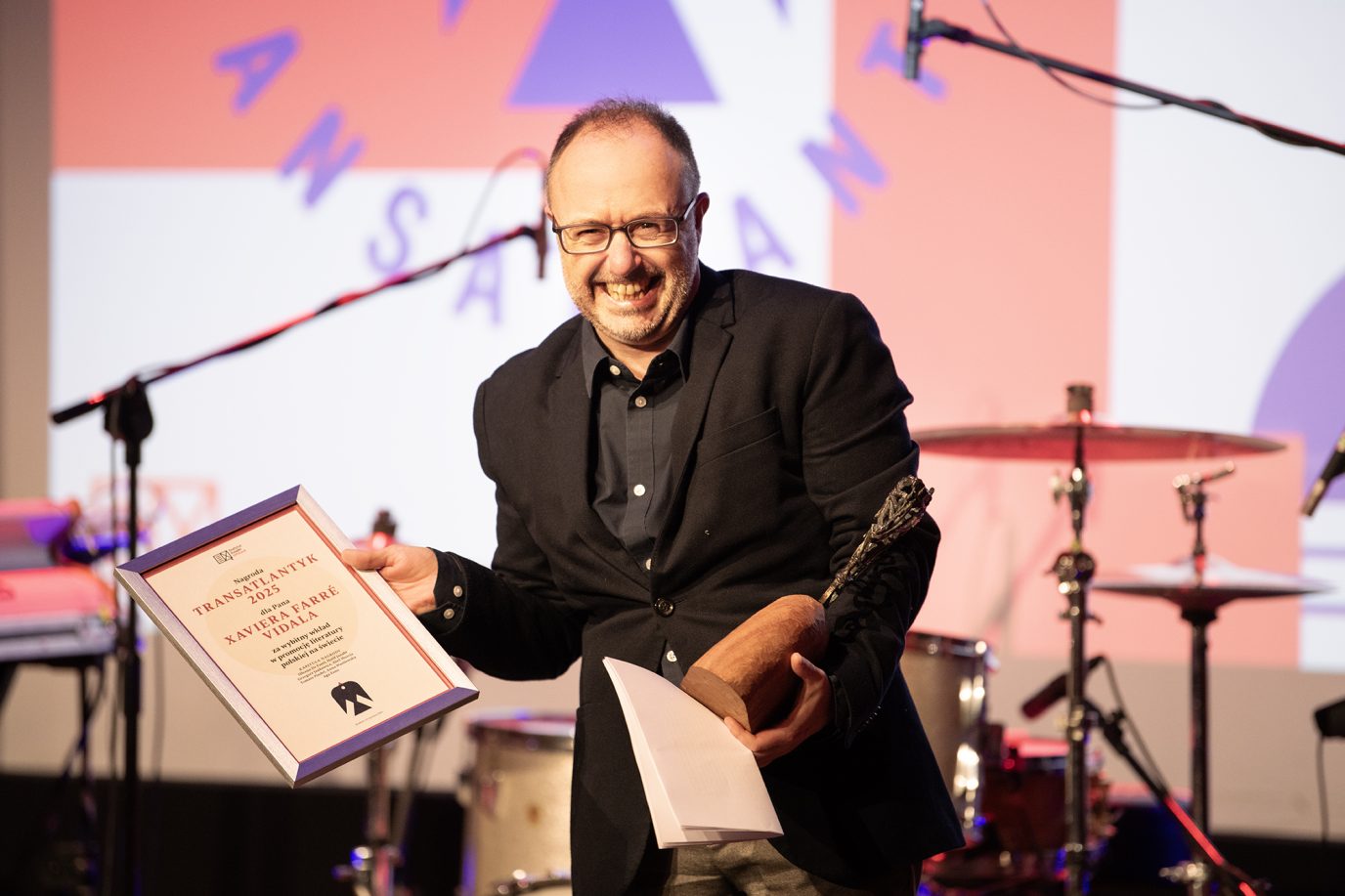
The Transatlantyk Award is presented yearly by the Book Institute to an outstanding ambassador of Polish literature abroad. The presence of Polish writers in the world is contingent upon promoters of our literature in various countries. Without their passion and industry, the presence and success of Polish books across our borders would scarcely be possible.
Nominations may be made by Polish and foreign institutions engaged in promoting culture, research centers, publishers, creative associations, as well as by private individuals.
Only citizens of other countries (including Poles with a foreign passport) may be nominated for the Prize. Nominations must be submitted by March 31 of this year.
Please send nominations to the Book Institute (ul. Zygmunta Wróblewskiego 6, PL 31-148 Kraków) by post or e-mail (b.gorska@instytutksiazki.pl) by March 31. Details are available on the page dedicated to the prize.
The award comes with 50 000 PLN and a statuette.
The winner is chosen by the Award Committee, composed of outstanding literary scholars, cultural animators, translators and the director of the Book Institute.
***
Winners of the Transatlantyk Award to date:
- 2005 – Henryk Bereska (Germany) – a Silesian translator of Polish literature into German;
- 2006 – Anders Bodegård (Sweden) – a translator and promoter of Polish literature in Sweden, well known in Poland;
- 2007 – Albrecht Lempp (Germany) – one of the architects of Poland’s success as a guest of honour at the International Book Fair in Frankfurt, and a translator of Głowacki and Pilch, among others;
- 2008 – Xenia Staroshyelska (Russia) – a translator of Polish prose into Russian since the 1960s;
- 2009 – Biserka Rajčić (Serbia) – a translator of Polish poets, philosophers, literary theorists, and a scholar of the Polish avant-garde;
- 2010 – Pietro Marchesani (Italy) – a great promoter of the work of Wisława Szymborska in Italy;
- 2011 – Vlasta Dvořáčková (Czechia) – a committed advocate of Polish poetry in Czechia;
- 2012 – Yi Lijun (China) – a literary scholar, and a translator of titles including Forefathers’ Eve, The Trilogy and The Captive Mind;
- 2013 – Karol Lesman (Holland) – a Witkacy expert who has translated the canon of Polish prose into Dutch;
- 2014 – Bill Johnston (USA) – a scholar and advocate of Polish contemporary literature, as well as the classics of nineteenth-century poetry; a force behind the success of Myśliwski’s novels in America;
- 2015 – Laurence Dyèvre (France) – a translator with around sixty translations to her credit, mainly Polish contemporary prose, spanning the whole of the twentieth century;
- 2016 – Constantin Geambaşu (Romania) – a translator and Polish scholar, who has translated around fifty Polish books for some of Romania’s most prestigious publishing houses;
- 2017 – Lajos Pálfalvi (Hungary) – a literary historian and critic, with nearly sixty book publications to his credit – translations of Polish literature, essays, and reportage;
- 2018 – Antonia Lloyd-Jones (Great Britain) – a translator of Polish literature into English and a great promoter of Polish culture; she has produced over a hundred translations;
- 2019 – Hendrik Lindepuu (Estonia) – he has over fifty books to his credit, as well as seventy plays; since 2003, he has been publishing Polish literature via Hendrik Lindepuu Kirjastus;
- 2020 – Ewa Thompson (Poland) – a promoter of Polish culture in the USA, a retired Slavic Studies professor at Rice University, where she brought up generations of Slavic scholars;
- 2021 – Tokimasa Sekiguchi (Japan) – a promoter of Polish culture in Japan who has translated such masterpieces as Jan Kochanowski’s Laments, Adam Mickiewicz’s Ballads and Romances and Vilnius Forefathers and Bolesław Prus’s The Doll;
- 2022 – Silvano De Fanti (Italy) – a translator of Polish literature into Italian and an indomitable promoter of Polish language and culture in Italy;
- 2023 – Hatif Janabi (Iraq) – a translator of Polish literature into Arabic, with an impressive number of translations of the classics of Polish literature.
- 2024 – Vera Verdiani (Italy) – a translator of Polish literature into Italian who has rendered Gombrowicz, Kapuściński, Lem and Herling-Grudziński;
2024 – Abel Murcia (Spain) – a promoter of Polish culture, translator and author of dictionaries. His translations include the works of Szymborska, Różewicz, Kapuściński, Lipska, Tokarczuk, Lem and Krynicki; - 2025 – Xavier Farré (Spain) – a translator into Catalan and Spanish, a tireless ambassador for Polish literature throughout the Spanish-speaking world.